
Does Rotating the Phone Over Your Head Really Work?
Last week from Niranjan we learned a little about phone antennas, this week I wanna dig deeper into how they work.
Length
The line on your phone might seem really short for an antenna, but whether the antenna is short or long is always relative to a wavelength. If the line length is less than tenth of a wavelength, then it is considered a “short” line. Thus take an example of a cellular radio frequency of 2GHz, the wavelength is 15cm, so the little length of line on your phone is often considered a “long line”.
Polarization
The EM waves of is made up of Electric field and Magnetic field that are orthogonal to each other and to the direction in which the plane wave is propagating in. Polarization refers to the orientation that the E field is radiated by the antenna. If the E field stay long a line, it is linearly polarized. If the x-axis was parallel to the ground, it is “horizontally polarized”.
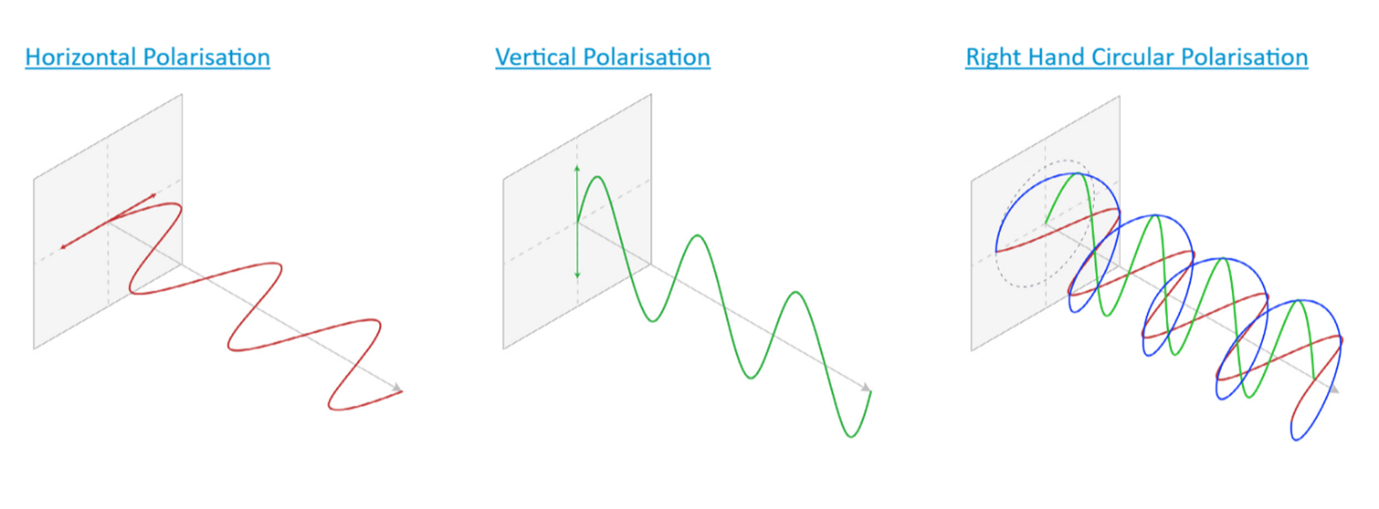
Illustration of different types of polarization
Does rotating the phone above your head really work?
Yes it does! (That is if you are outside and above ground level) Phone antennas are often linearly polarized, which means that rotating the phone can possibly match the polarization antennas to the signal, increasing reception.