
Selecting a motor for the Boom Box
M5 has an impressive project roster, and Robert and I are planning to add a new gem to the collection. The Boom Box is going to be a human-sized cart that will take the shape of a Pioneer RT-707 and can drive itself around campus and Amherst center to blast innocent people with loud music.
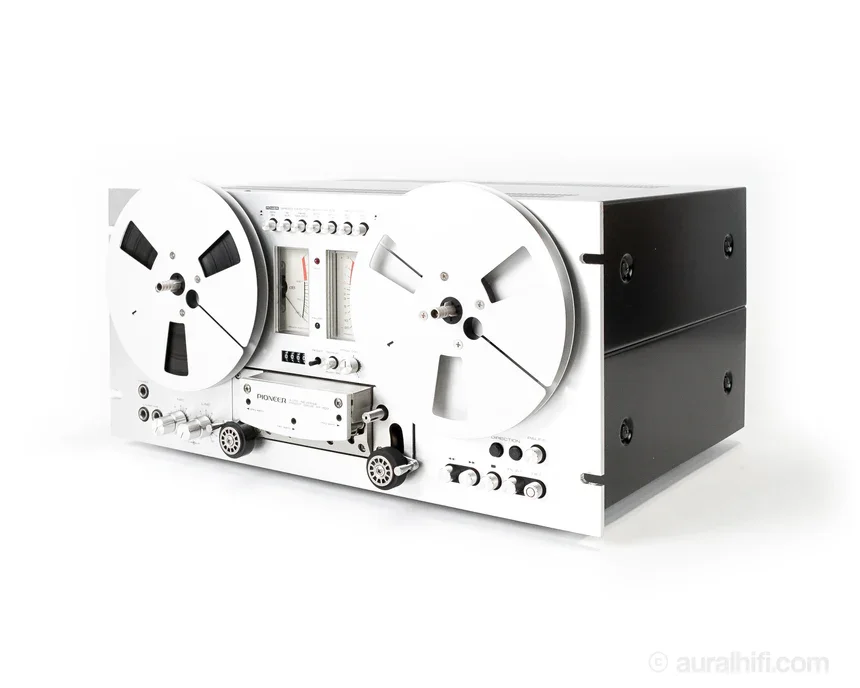
The Pioneer RT-707, what we will model the boom box to look like
The Boom Box will require a large amount of power, however, as we expect the curb weight to reach about 300 pounds! To figure out what motor to select for this, we need to do a bit of basic physics from freshman year to guide us to the right selection.
Our given parameters are as such:
Weight is 300 pounds, or m = 136 kg.
Wheel diameter is 12 inches , or r = 30 cm.
Assumed rolling resistance of rubber to dry asphalt C_{rr} = 0.1 N/N (very high, but I’m assuming the worst, from internet sources)
Alright, let’s start with finding the torque required to comfortably break the static friction. With no other forces acting on the cart, our normal force is opposite to our gravitational force, which is 1360 N, pointing up. I multiplied by 10, the approximate and more conservative gravitational constant. Thus, the static resistance force we must apply parallel to the ground is our assumed coefficient times this normal force, which ends up being around 136 N.
Okay, so if we need to push on the cart with 136N of force parallel to the ground, with 30 cm diameter wheels, we need to torque the wheel with 40.8 Nm of torque. Let’s just aim for 50 Nm to make it break from a standstill easily.
A motor I have been looking at is VEVOR’s 2kW Brushless DC motor. These motors are reccomended to be geared 11:64, that is the 11 tooth gear included on the rotor, will be bound to the drive wheel with by a chain to a 64 tooth gear. VEVOR states that this motor outputs about 4.8 Nm of torque, so using two of these motors with this reduction, we can expect a stall torque to the wheel of 56 Nm!
Looks like this motor is a perfect fit, and I checked, 64 tooth sprockets with 8mm pitch will absolutely fit within the diameter of our wheels.
So now, all that’s left is to come up with the subframe to support these motors, and we’ll have a rolling prototype! Once that is working, I’ll get crafty with some wood to drop on the detailing to make the Boom Box look like a Pioneer RT-707.
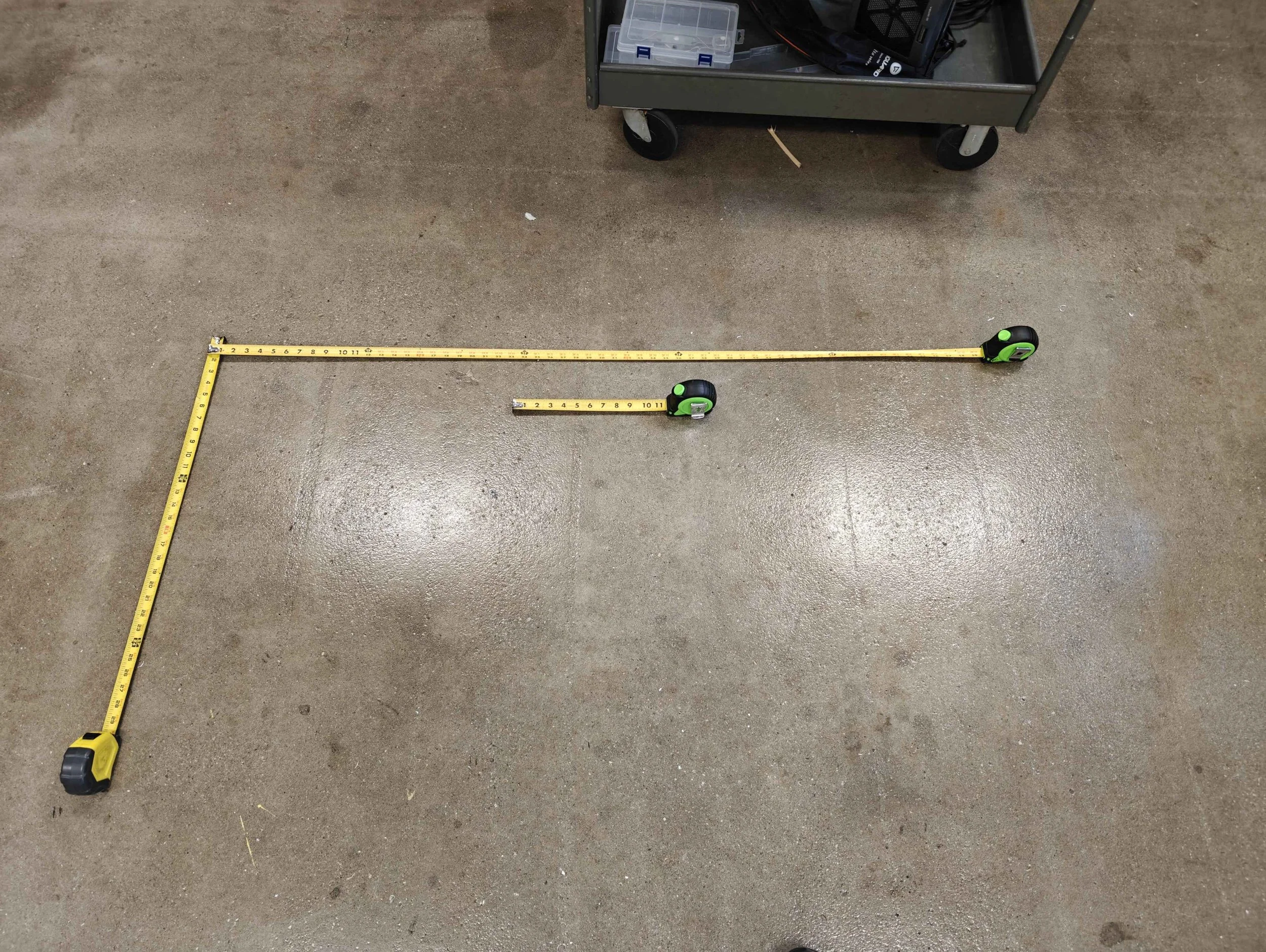
The rough dimensions of the Boom Box
