
The Glory of Service Manuals
Whenever working on a project, whether it be electronic, mechanical, or both, knowing what you’re working with is half the battle. When working with a piece of vintage equipment, like a typewriter or a phone system, the Internet often lacks an easily accessible group of people who have done it before. This can make such projects rightfully intimidating when you’re used to working with modern devices such as Arduinos and Raspberry Pi’s, which boast extremely active user forums and maker communities.
However, vintage equipment-especially popular, professional equipment from prominent companies-often have a resource modern equipment simply lacks: A well-written, illustrated service manual. These manuals contain everything a trained service technician would need to diagnose and repair a malfunctioning device. This includes everything from tips on soldering SMT ICs, to annotated images of the tiniest components, to detailed circuit schematics and annotated diagnostic flowcharts. All accompanied by explanations of how these components work.
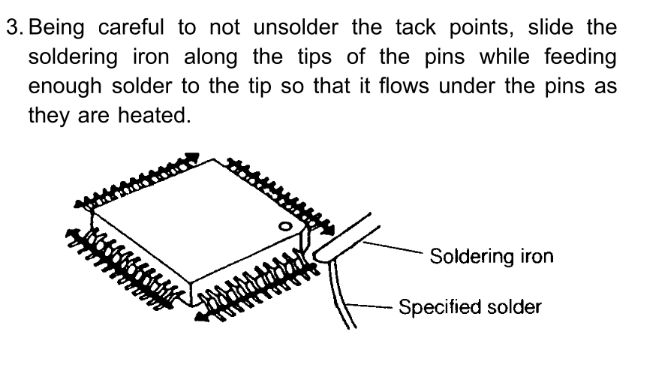
Image from the Panasonic KX-TA824 Service Manual
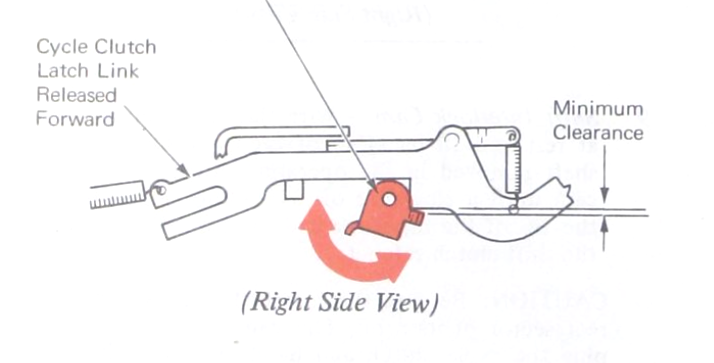
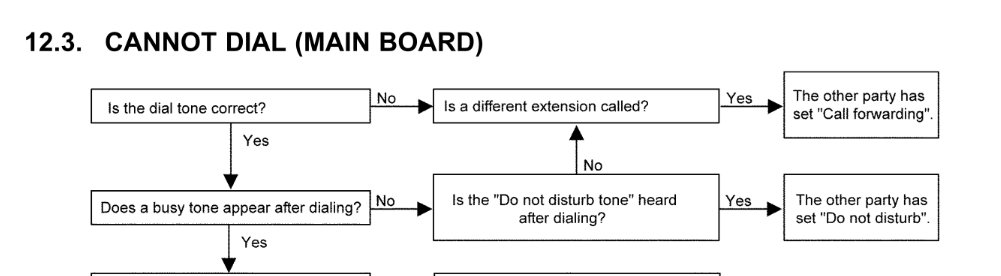
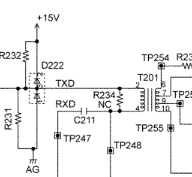
While these are intended for trained service techs, an engineering student or semi-experienced hobbyist can use these diagrams to modify or even hack into the equipment allowing you to take advantage of the exact behavior of your equipment.
This means that when working on vintage equipment, the first step isn’t necessarily to dive in and start reverse engineering the device. If you can find a good service manual you can skip potentially several dozen hours of tinkering and experimentation!
As an example, I’m currently working on a circuit to allow us to get an ADC (analog to digital converter) in the middle of an analog telephone line. Standard phone lines must be incredibly high impedance when the phone is hung up, or on-hook. However, by taking the circuit in the service manual and replicating it in a basic simulator, I found that the actual threshold between on and off hook is several orders of magnitude lower. With this knowledge, I could actually use the phone lines as a power supply for our circuit! There’s enough margin for error to draw a few tens of mW in total from the 24 phone lines; more than enough to operate a modern MCU + a couple ADCs!
This is, in all likelihood, a bad idea because the power regulation circuitry is all linear, and phone lines aren’t meant to be active 24/7. Despite this, with the power of the service manual, I know it is possible and should work!
Now, there is one unfortunate catch: vintage equipment tends to be pre-Internet, or at the very least so old that all the places on the Internet that once mentioned it are hard to find. This can make finding service manuals for some devices an extremely difficult task; often there are only physical copies of the manual available, or the documentation is only available in person in some library nearby the historic headquarters of the manufacturer. Finding a proper service manual can be quite the treasure hunt!
Good hunting!
