
Nuts… But Riveting
M5 is setting up for our annual Telethon. Through this process I am creating a wall for our PBX (Private Branch Exchange). It is a private telephone network used to manage internal calls and connect to the public telephone network.
We needed a way to hold up a giant piece of 4’x8’ plywood sheet and our best option was aluminum rails and rivnuts (aka rivet nuts)!
A rivnut is a threaded cylinder that compresses to clamp around sheet metal or other thin materials
There are several key advantages:
Single-Sided Access: Because they are "blind" fasteners, you do not need access to the back of the panel.
Material Versatility: They can be installed in materials too thin for traditional tapping, such as sheet metal, plastics, or resin composites, without risking structural deformation.
Replacement & Maintenance: Unlike a standard rivet, which must be drilled out, a Rivnut allows for components to be bolted and unbolted repeatedly.
Speed of Installation: Once the hole is prepared, setting the insert takes mere seconds, making it far more efficient than welding a "nut plate" or a "boss" onto a frame.
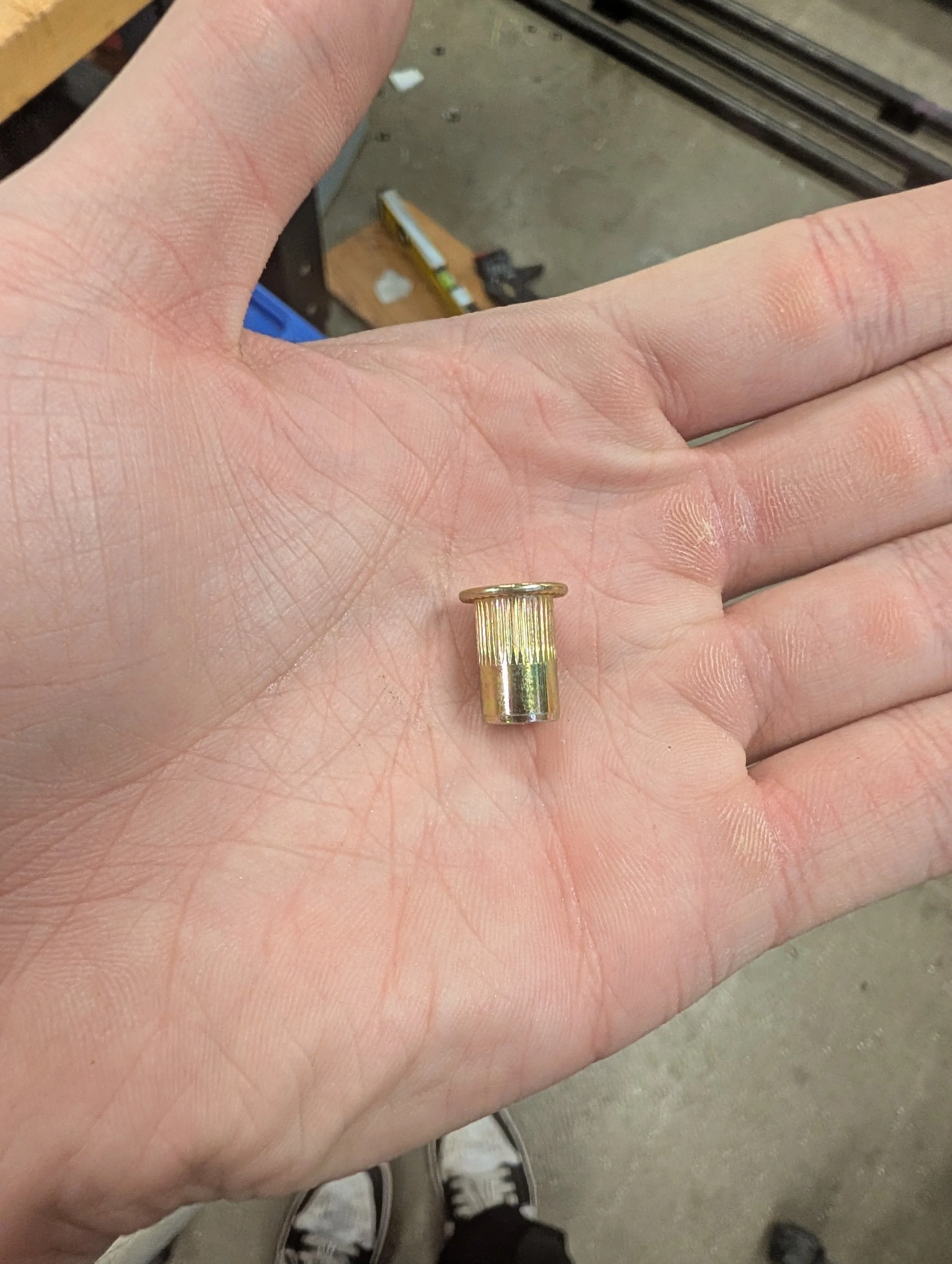
This is a rivnut, there are a few different types but this one is a zinc plated ribbed version. (The ribbing adds more torque resistance and spinning in the hole)
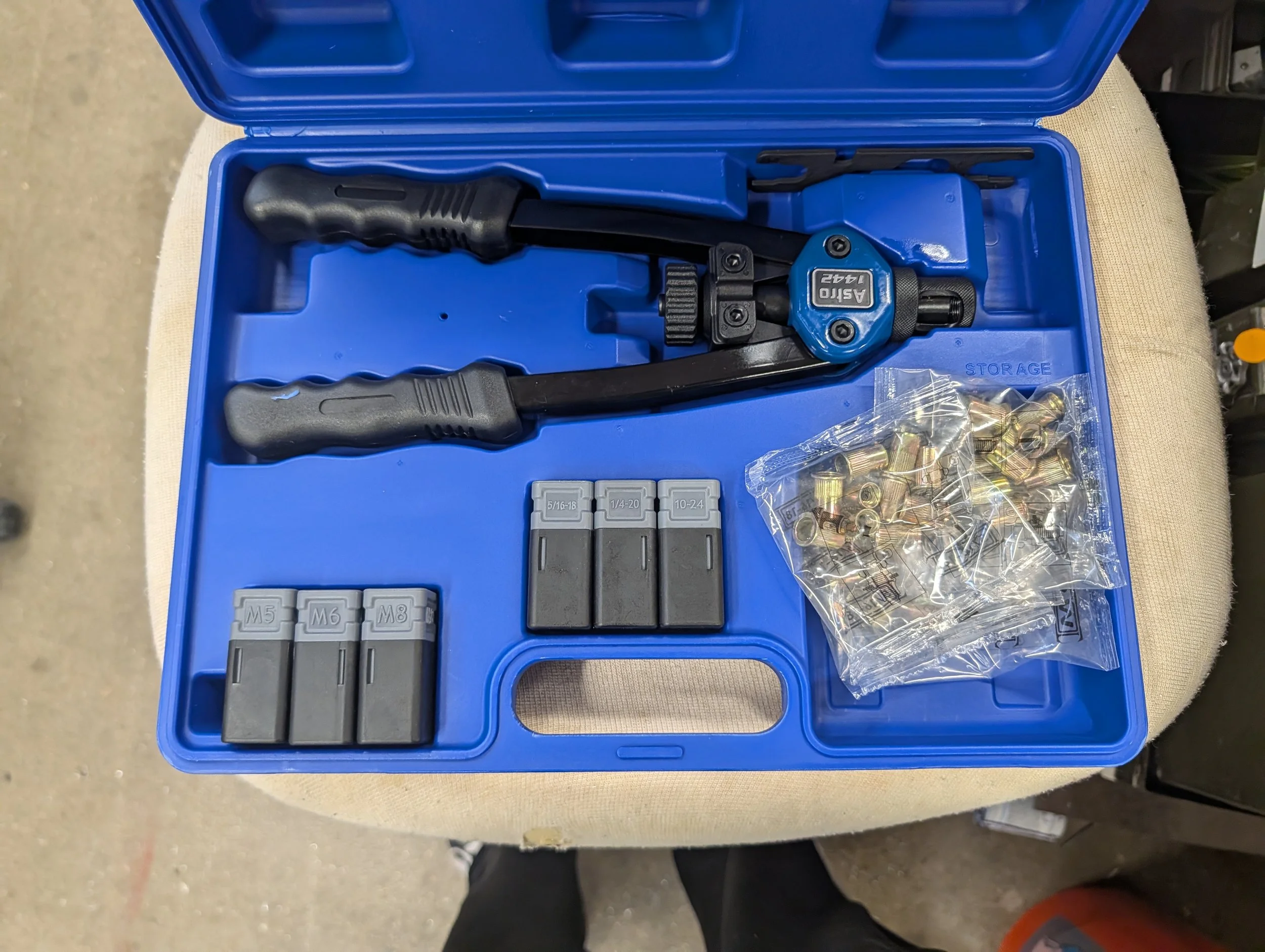
This is the rivnut rivetter, it comes with different sized mandrels
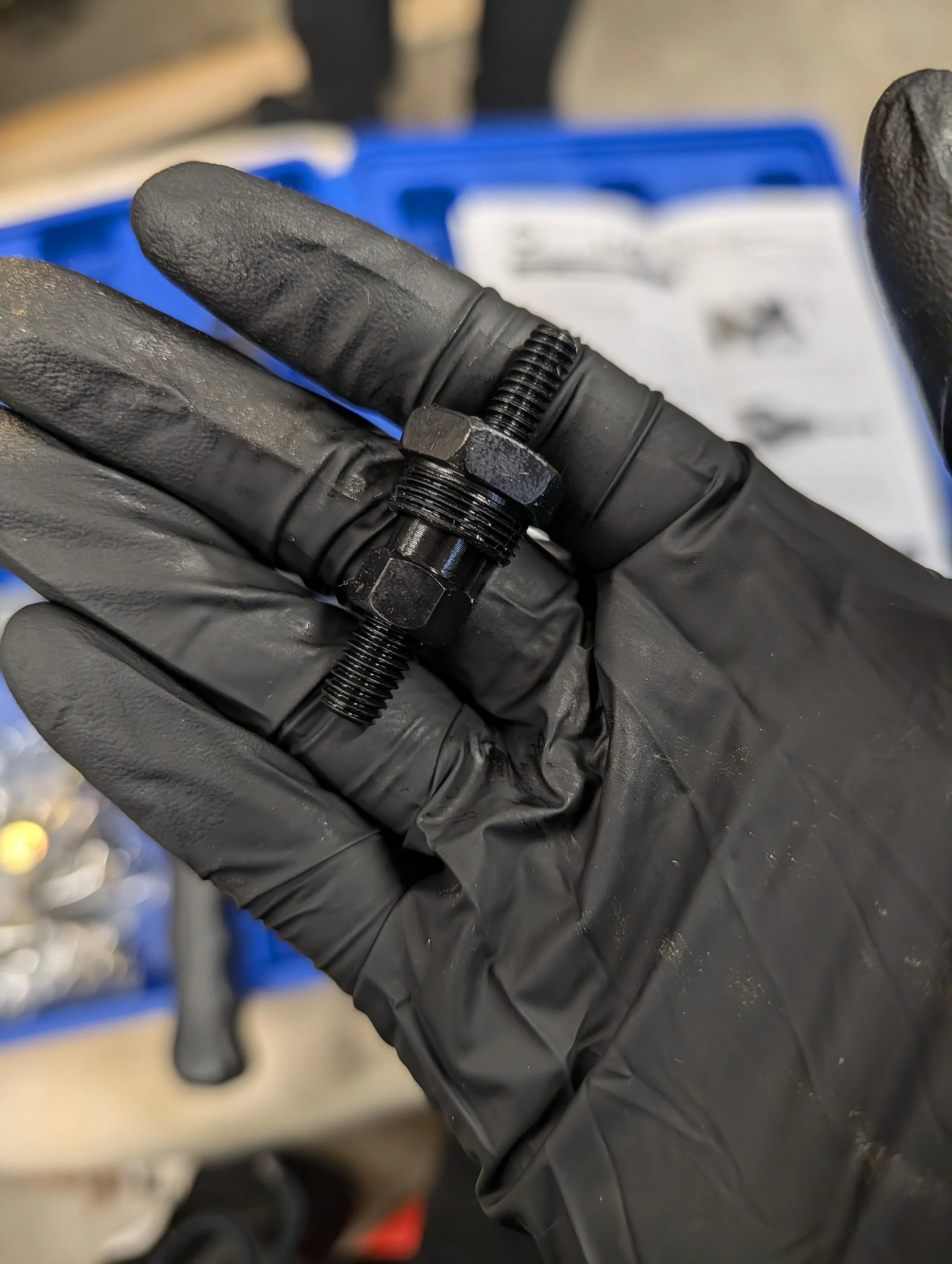
This is a mandrel sized 1/4-20. They are specific to each nut size.
It is pretty easy to use this tool, to connect the mandrel you just screw it into the rivetter. To use you simply screw a rivnut onto the mandrel, insert into the hole, and squeeze the tool.
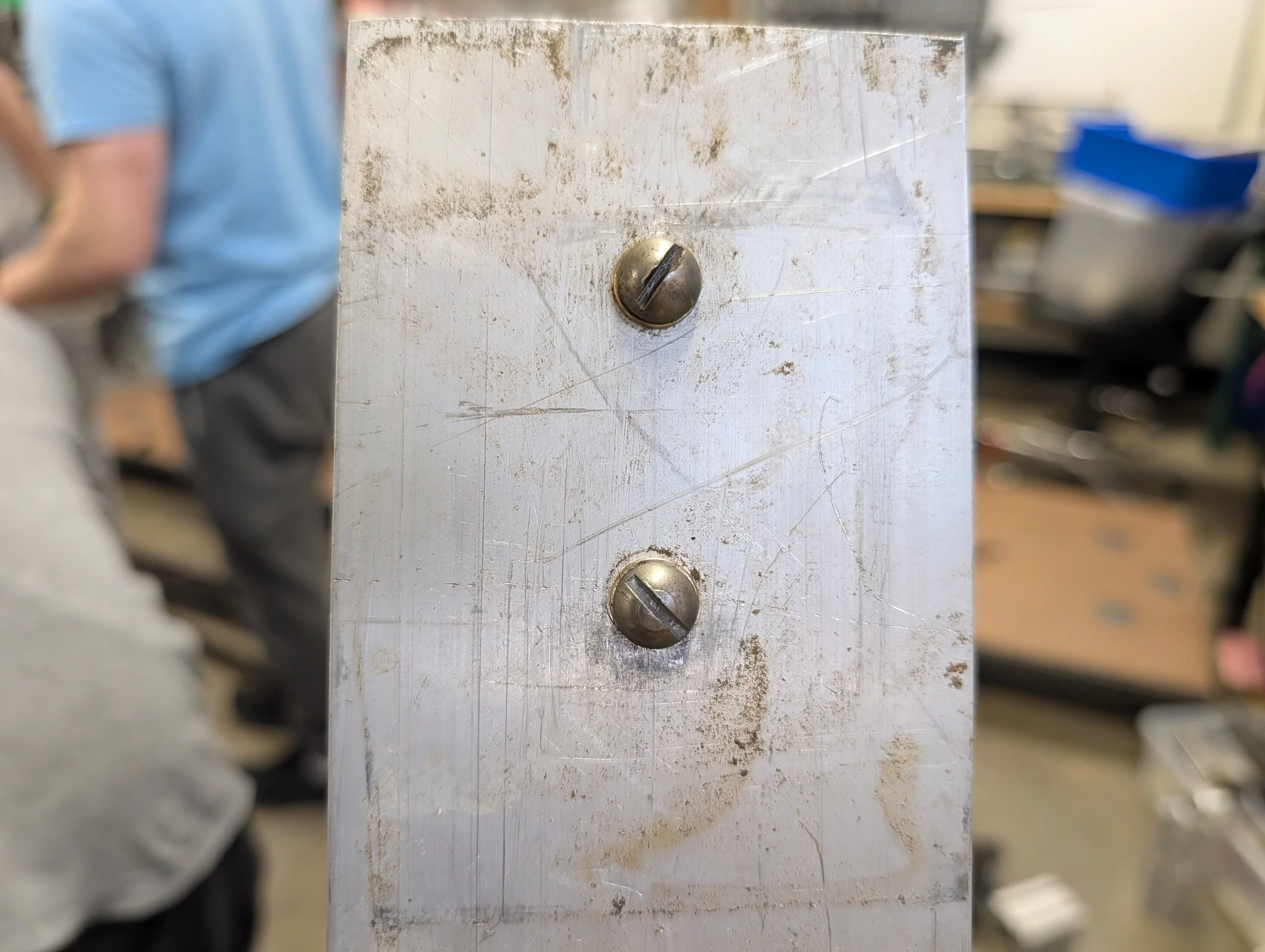
The end product is very neat and tidy, and there is significantly more clamping force than if the bolt was simply threaded into the sheet meta
Aidan Chin
Computer Engineering 2026
23 March 2026
