
Is This Thing On?
If you’ve ever sang a song, been to a live concert, or watched tv game shows, you most definitely have seen or even held a microphone. What you might have not known is that microphones have a lot of variety in their functionality. Today, I’ll be explaining all of the general and more nuanced aspects of how these devices work.
Dynamic vs Condenser Microphones
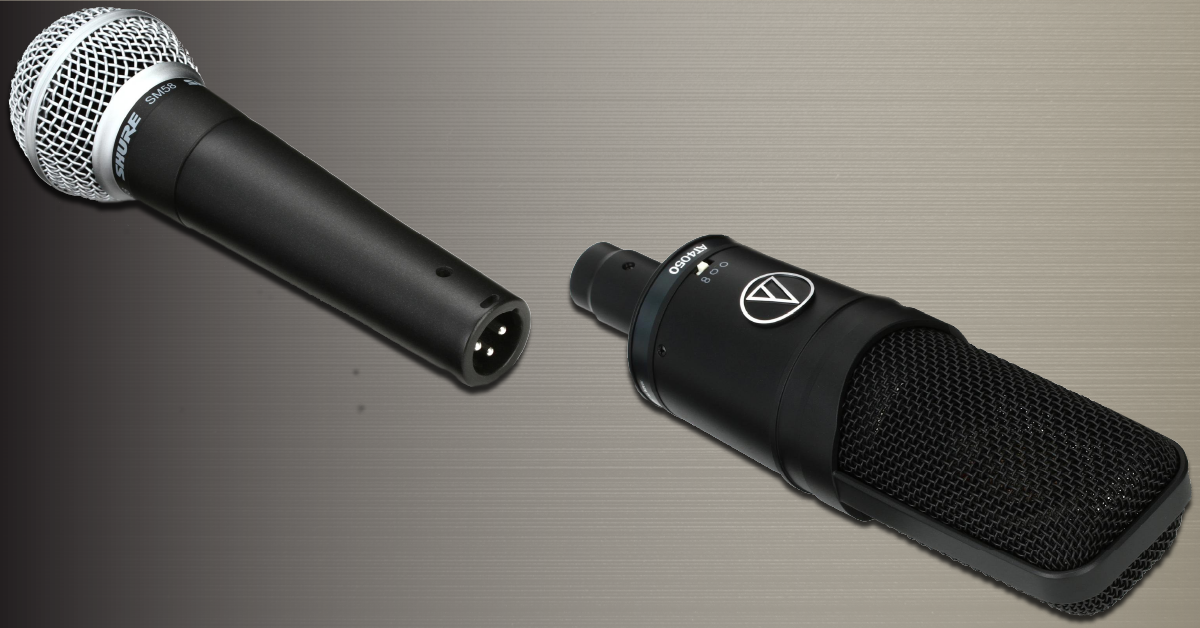
Dynamic Microphone (left), Condenser Microphone (right)
First, it is best to be able to differentiate between the two most commonly used microphones, dynamic and condenser. Dynamic microphones are most commonly used in many live settings whilst condensers function and sound best when in quiet/sound treated environments (I’ll go into more details on why that is later).
Here’s some more common stats for both microphones:
Dynamic:
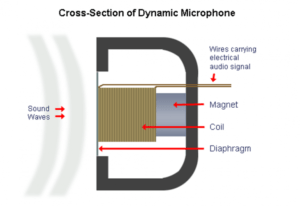
- use electromagnetic induction in order to convert sound waves into a signal
- low output, meaning it requires much more gain in order to be heard
- robust and sturdy build
- often much cheaper
Condenser:
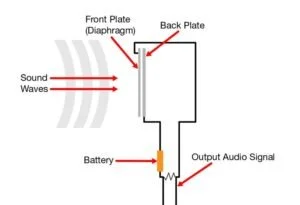
- has a light diaphragm that vibrates against a backplate, converting sound waves into a signal fluctuating capacitance
- different levels of sensitivity depending on diaphragm size and cardioid polar pattern
- sensitive components
- requires a +48V power boost from a preamplifier
- can get really pricey for the professional stuff
Polar Patterns
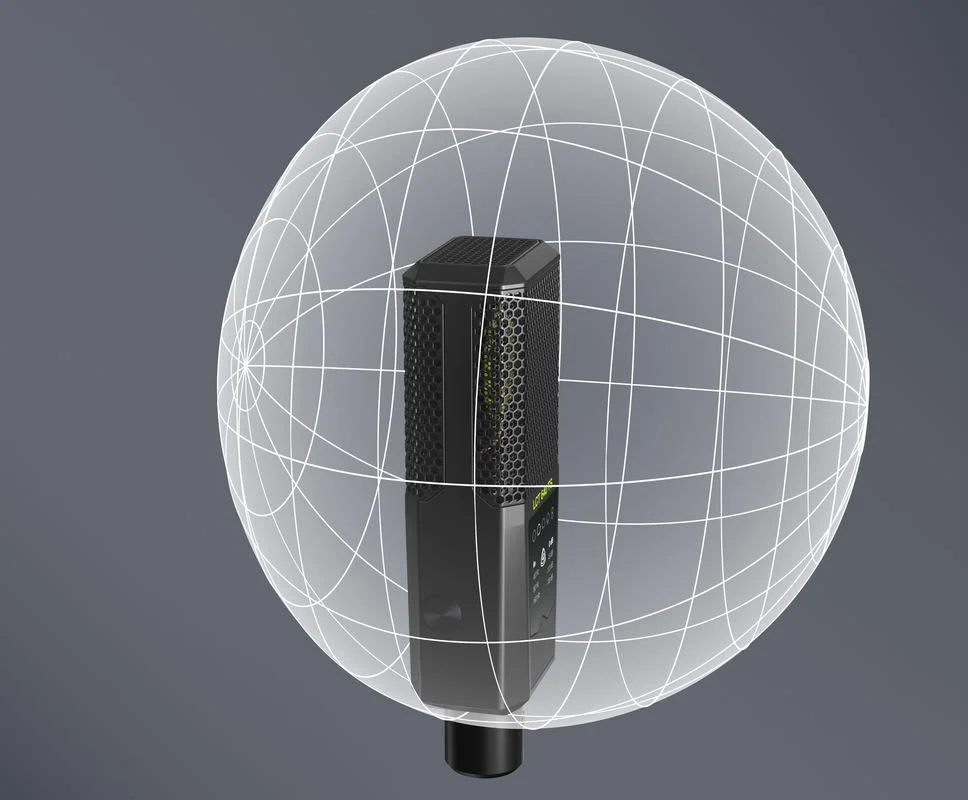
Complete polar pattern - LEWITT
Now that we’ve settled the differences between dynamic and condenser mics, it’s now time for me to show you the real magic creates the biggest difference between the two.
Their Polar Pattern!!!
The best way to describe the polar pattern of a microphone is to imagine a sphere surrounding the center of the mic itself, that’s the mics entire sensitivity area. Then, by a selection of degrees, only the area chosen will allow how much of the sound wave will be used in the signal. If that sounds overly complex, don’t worry, it’s much more intuitive once you see it yourself!
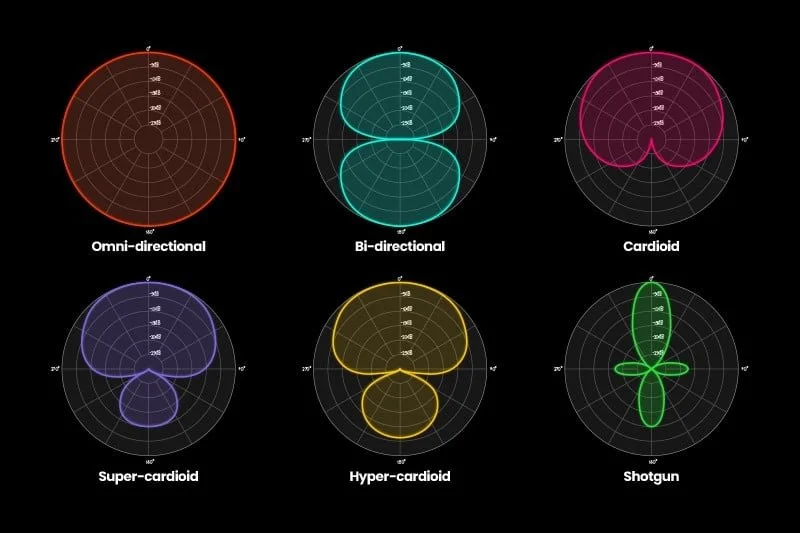
Types of Polar Patterns - Global Audio Visual
Here we have some standard polar patterns used in microphones, the most common of them being Cardioid, Super-cardioid, and Hyper-cardioid, the rest being used for more niche applications.
Cardioid is the pattern most commonly used in dynamic microphones since the combination of only allowing what is in front and its ability to withstand high gain makes it the perfect application for just capturing vocals in a room filled with a lot of noise. Hence as mentioned before, makes dynamics incredibly effective for live performances or just noisy environments.
A little fun fact: If you’ve ever heard that high pitched ringing from a microphone, that’s called feedback. Feedback is caused when a microphone is able to pickup on it own frequency, causing a closed loop of sound that repeatedly gets amplified. Hence, why it’s important to ensure the microphone faces away the front of any speakers and other microphones. This cuts out the feedback, and you can thank the Polar pattern of dynamic microphones for that!
On the other spectrum, you have super/hyper cardioid polar patterns which are better suited with condenser microphones. This makes it so the microphone retains the delicate details of the sound that gets sent out as a signal. It’s also very important though that these microphones are in a low volume space since the added sensitivity of the lightweight diaphragm of the condenser makes so there is a lot of added feedback and noise in the signal.
I hope you learned something new about microphones today!
As always if there are any lingering questions I’m always happy to answer them!
See you,
Computer Engineering, 2028
Raffy Landestoy
March 1st, 2026
