
What’s the difference between VCC,VC,VDD, and VD?
When I was doing my 210 lab, I realized that many notations are used: VCC, VDD, VD, VC, and I have been using them interchangeably. Today, I looked into the difference between these notations and realized that there are actual differences.
The nomenclature came from a 1963 IEEE standard 255-1963 "Letter Symbols for Semiconductor Devices" (IEEE Std 255-1963). In this section I quote: “Supply Voltage may be indicated by repeating the terminal subscript. the reference terminal may then be designated by the third subscript. Examples: VEE, VCC,VBB…”
Back to the question, VDD refers to the “Voltage at Drain” usually in MOSFET circuits as oppose to VD, drain voltage. For example, the positive voltage supply going into an amplifier would be noted as VDD. This is further displayed in the diagram below.
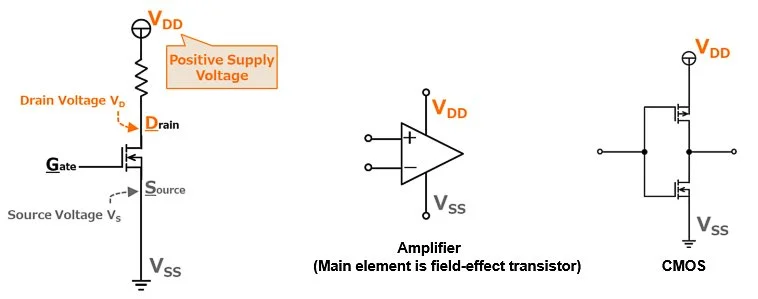
Difference between VDD and VD
The “C” in VCC stands for “Collector” and it’s usually used in bipolar transistor circuits. VC just means collector voltage as the diagram below.
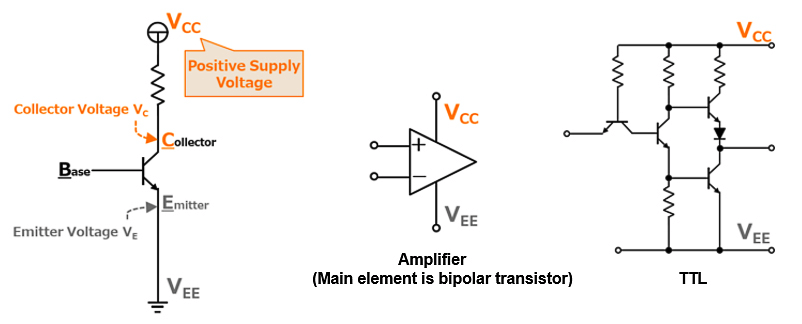
Difference between VCC and VC
Source: https://www.allelcoelec.com/blog/understanding-power-supply-voltages-in-electronics-vcc,vdd,vee,vss,and-gnd.html?srsltid=AfmBOop0kCwRD_KEiBojglGwLb5hrMAPK9sLKlKapMbMrqSiQUxKf0Pl