
Racing Sim Pedals - How Aidan and I won Best Mechanical Hack at HackUmass XIII
This HackUmass, Aidan and I agreed that the one thing we were definitely doing was a hardware project. What we ended up doing was almost more mechanical engineering work than anything else.
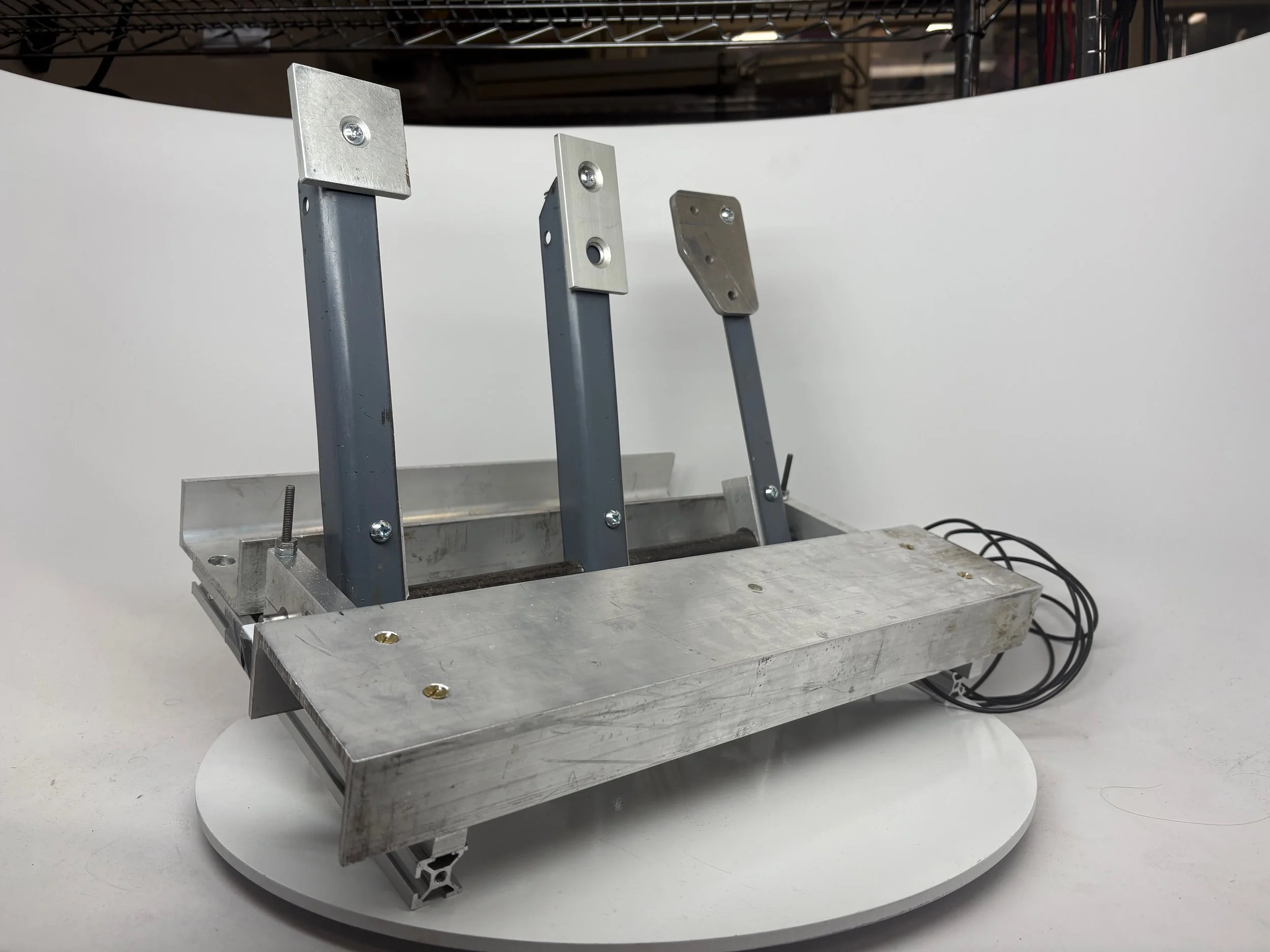
Our finished product: the clutch on the left, the brake in the middle, and the accelerator on the right
Using the M5 machine shop’s offerings, we machined a completely custom construction of aluminum and steel. Our constraint was making sure we could bolt this design to Aidan’s custom racing rig and also be able to have space for sensors as the pedals change angle.
The pedals use two bearings that were set into aluminum blocks to swivel up and down on a rod. There are spacers present between the pedals made by cutting up an old pipe, and the rod was clamped down at each end using shaft holders we made by cutting a vertical slit through the hole, and using a screw to close the gap.
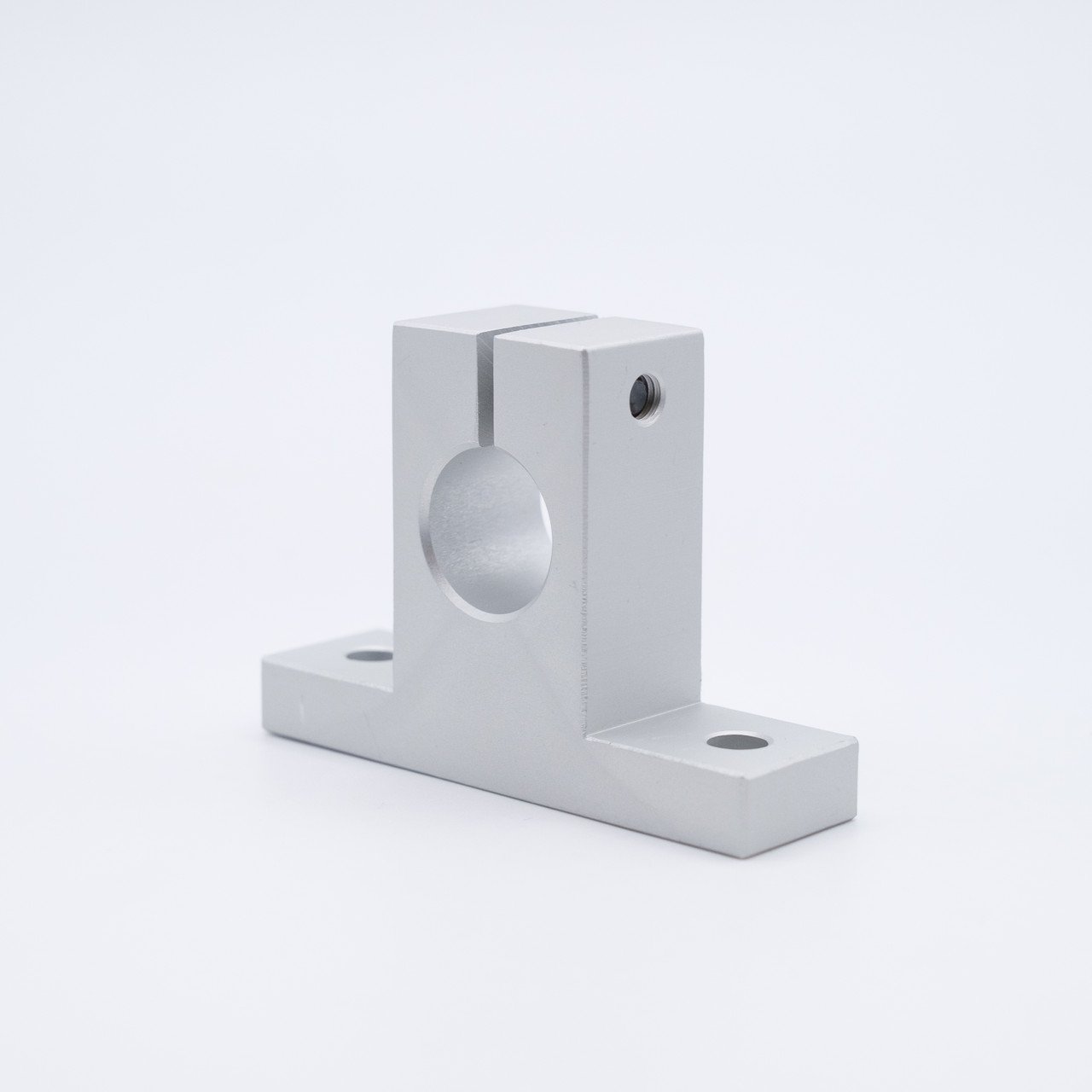
Example of a shaft holder, the top screw is used to tighten the tighten around the circumference of the rod
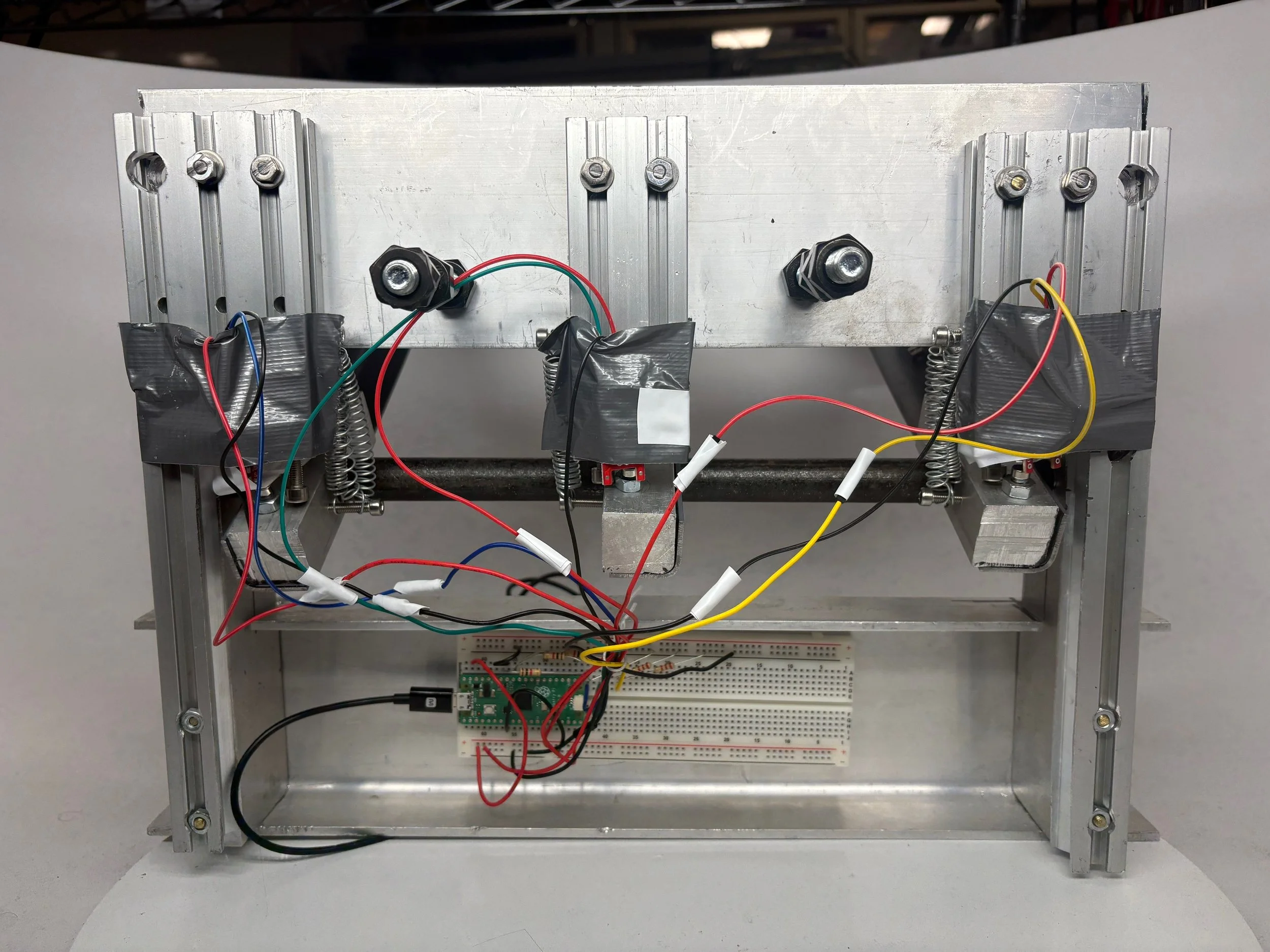
Bottom view of the pedals showing where the linear hall effect sensors are mounted, not visible is the magnets on the bottom part of each pedal
Using linear Hall Effect sensors, we are able to take measurements as the pedal is pushed down and then back into position. The output value decreases as you create distance between the magnet and the sensor, so for our Human Interface Device input, we had to invert the values so that the game controller saw a linearly increasing signal when testing the controllers.
Our chosen platform to read the Hall Effect sensors and send HID game controller signals was the Raspberry Pi Pico, since libraries existed for setting up the Pico as a game controller. We originally tried the Arduino UNO and found that a special device called the Leonardo was needed to set up the Human Interface Device recognition.
Here’s a video of the pedals working during our demo at HackUmass
