DIY: The ethic of M5
Recently, we made the switch from Adobe InDesign to the open-source program Scribus, a free equivalent supported by volunteers and donations.
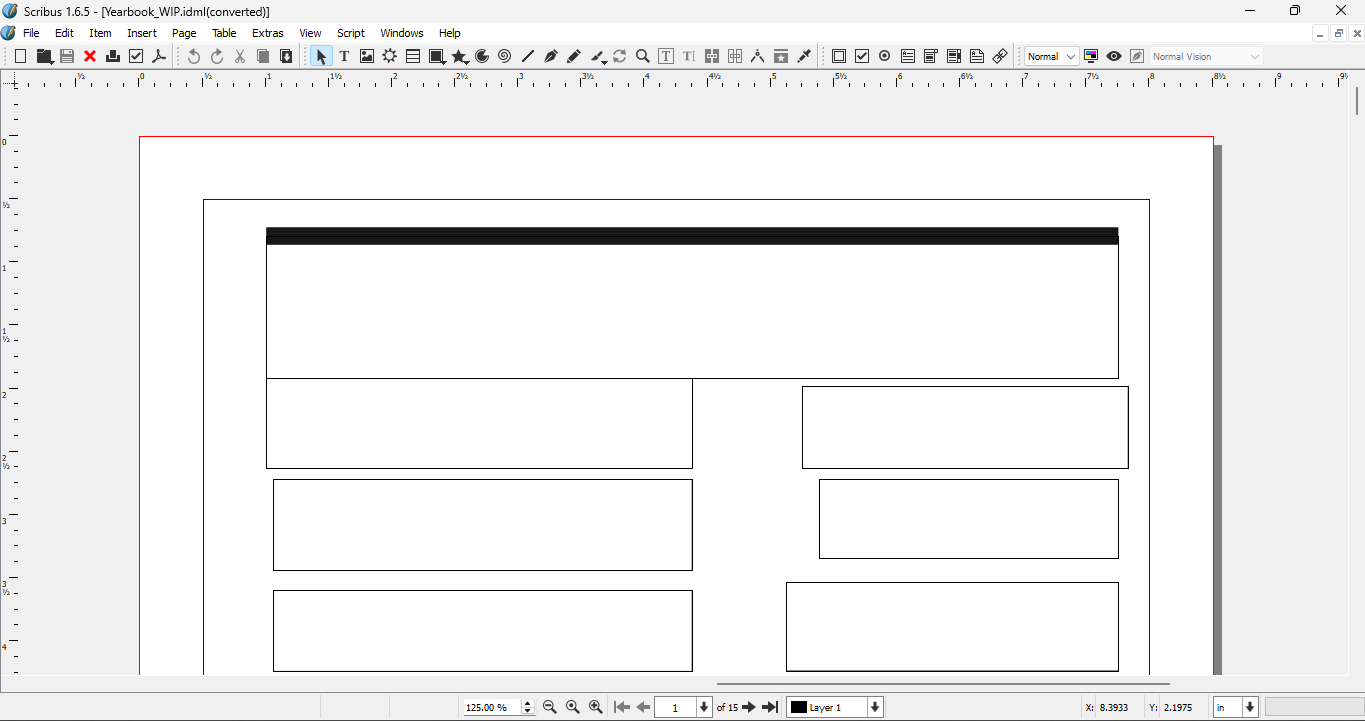
Screenshot of a document open in Scribus
While on the surface this is a great cost-saving switch, there is a deeper component at play: “DIY”.
The ethos of M5, in addition to fostering problem-solving-based learning, is a “Do-It-Yourself” ethos. Historically, “hacking” was a term used to describe creative problem solving before its association with cybercrime. Often, these solutions came from tech enthusiasts, without approval from “institutions”.
However, because of how engineering and adjacent fields have become a golden ticket for economic success in an increasingly scarce job market, many people flock to it not out of curiosity, but out of economic need. This has created an ever-stiffening culture that rewards test-maxing, rushed effort, but most destructively, the displacement of the “Do-It-Yourself” ethos.
Making the switch to Scribus is a microcosm of how M5 exists to fill the gap between the old engineering ethos and the modern hyper-competitive nature of engineering. Since Scribus is an open-source program, anyone can download it and see how it works. Additionally, because it is open-source, people can make their own edits to the source code for their own machines, which promotes the “hacking” ethos that used to pervade engineering departments.
Nevertheless, the best part of this change is that now students from across ECE can collaborate on the M5 Yearbook project during MakerDays on Saturdays in M5 starting next week. We hope to see you there!
-Aleksa
