Making a Ground Station for Rockets!
Last week, Artemis II launched! Woo-hoo!
When you send a rocket into space, you definitely want to be in communication with the rocket: If something goes wrong, where it is, how fast its going, how much fuel….there is just so much information to know!!!
This is where a ground station comes in. The ground station intercepts data received and translated this to understandable information. For huge rockets traveling record-breaking distances (wow so cool NASA Artemis 2), this would mean a very large, complicated system.
Previously, RF was used in the form of the DSN (Deep Space Network). These are a collection of HUGE antennas (the largest is 230 feet diameter) placed across the world so as the earth turns we won’t lose signal. The spacecraft would send essential data, pictures and videos to these antennas which would then be boosted if needed and then converted to actionable data.
On the Artemis II, NASA pivoted to an Optical Communication System or O2O which uses laser beams to transport data. This is actually the first time this system is being used on a crewed lunar flight, although it was rigorously tested on the ISS, and through Lunar Laser Communication Demonstration and many other demonstrations. The system was developed at MIT Lincoln labs in partnership with NASA.
However, to build mid-power model rockets that don’t even cross the troposphere, our system can be alot simpler. On the rocket team, we plan to do live telemetry, for which I am working on the ground station.
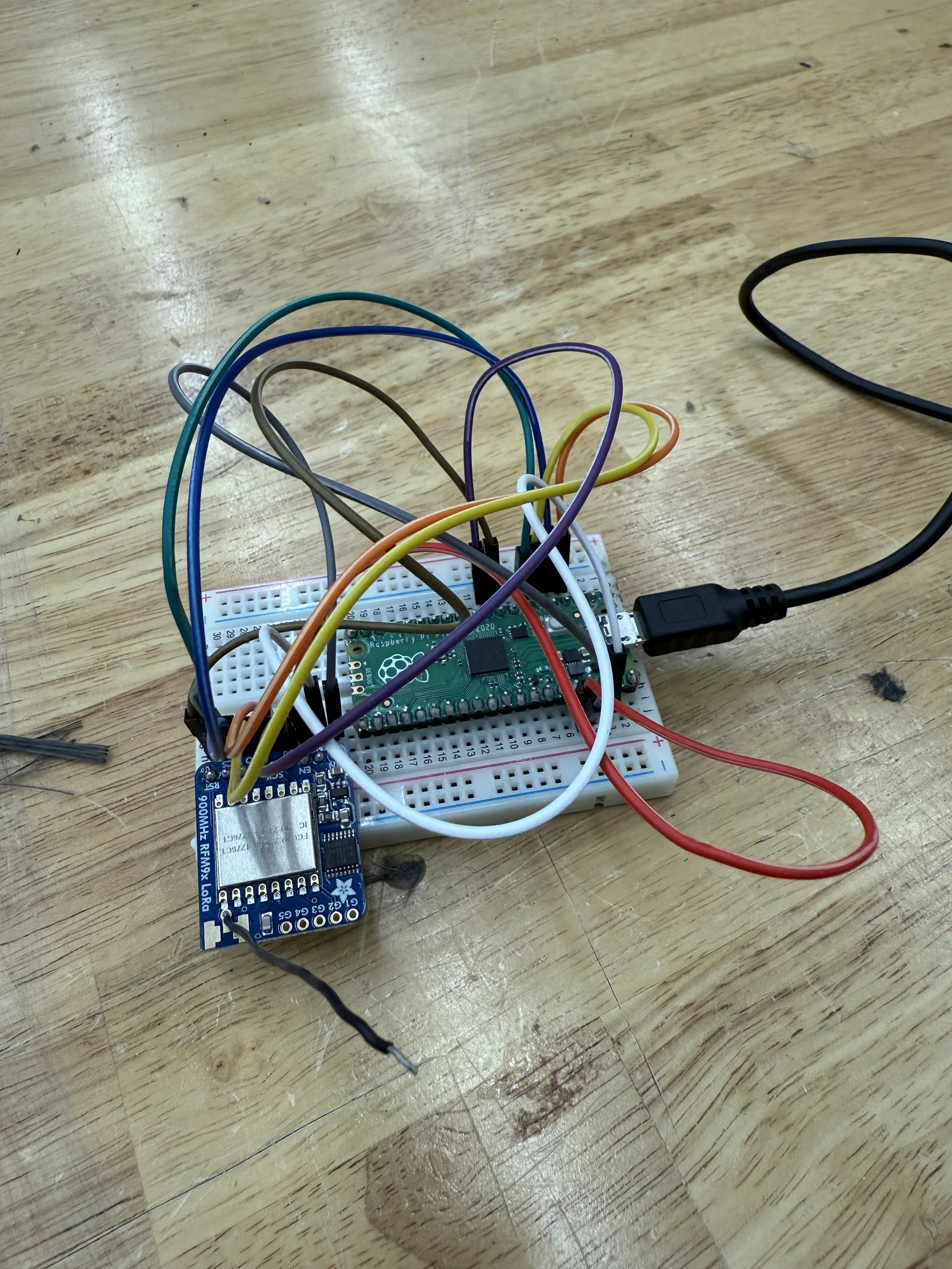
We plan to use LoRa which is a low-power long-range communication protocol. This can travel over 20km in ideal conditions with 20 dbm. We are using a raspberry pi pico to receive, organize and translate packets. We’re then using a pi to connect to a display and portray the information with graphs and maybe 3d models???
So far, we have successfully tested the LoRa modules and displayed packets on a terminal. Will keep you updated on the final ground station and telemetry system!