
How to sniff the Voyager signal
Back in march I found a very interesting paper. It turns out that in 2002, NASA released a paper going in depth into how the Voyager probes telecommunication systems work! The next logical step is to design a system that would allow for receiving signals from the voyager probes.
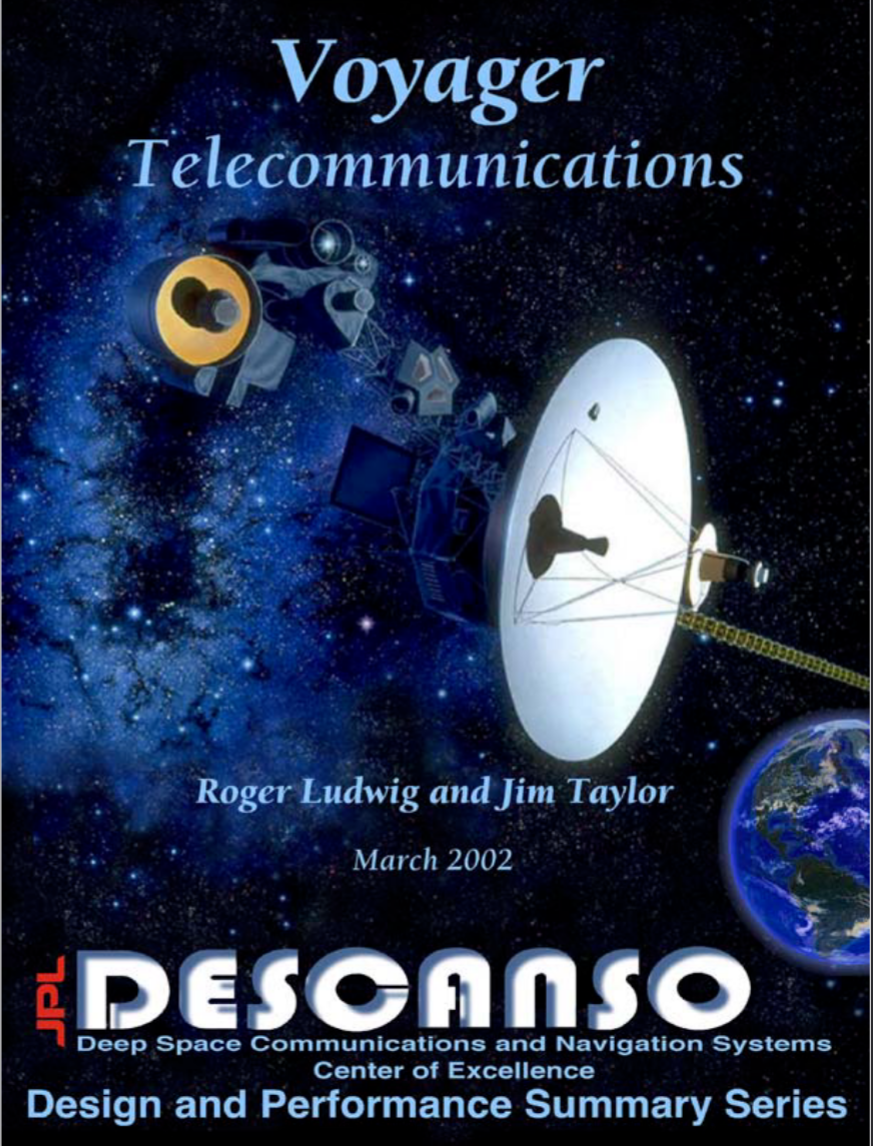
This paper has everything needed for engineers and scientists at nasa to explain how their voyager space probes communicate with their Deep Space Network. While we could simply copy the DSN configuration, it’s more fun to engineer a solution.
This is a golden opportunity to utilize the knowledge I’ve obtained in my antennas class to figure out some cool numbers.
Notably: How large an antenna do you need to have to be able to receive a signal from the voyager probes?
First off: What do we actually need to figure out? The paper has the following, extremely helpful figure:
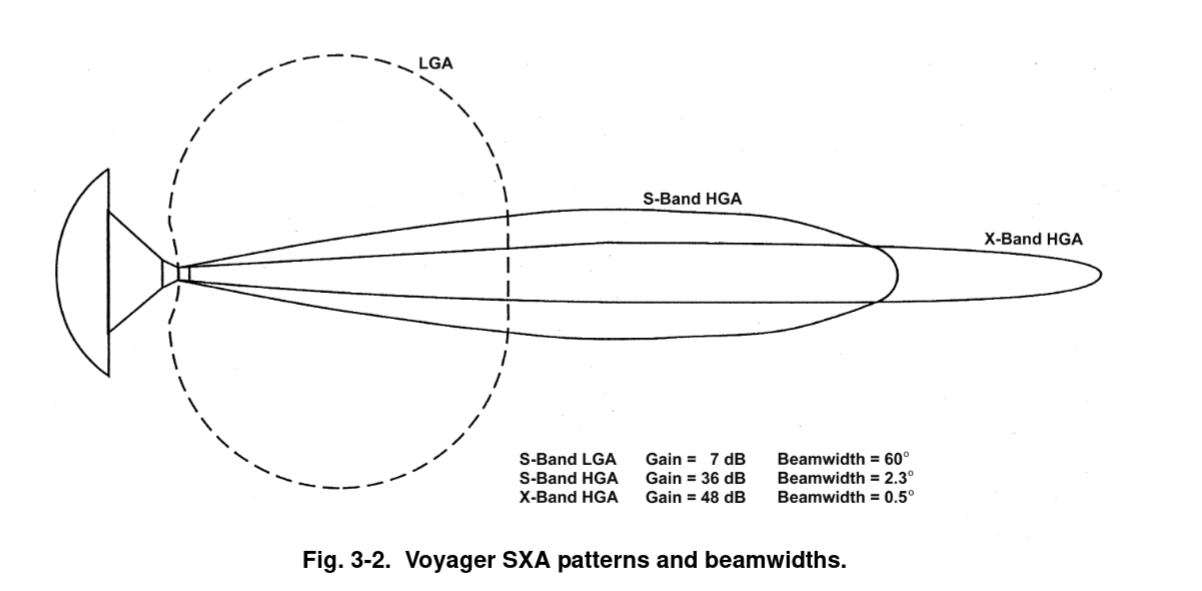
Then, from the paper, we also know that the voyager probes have two modes: high power and low power. High power has a transmission power of 18W, while low power is slightly lower at 12W.
Utilzing the Friis transmission formula, we can now find the power received via an arbitrary effective antenna area on earth.
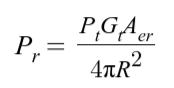
The variables we know are thus:
P_t and G_t are transmitted power and gain.
R is range, currently sitting around 25.4 trillion meters for voyager 1.
The rest of the variables are:
P_r is the available power.
A_er is the effective antenna area.
Now we have an equation for estimating the power recieved for a given antenna, next to figure out how much power we need to receive!
Assuming we are using a common RTL-SDR, we will first need to downconvert the signal from X-band (8GHz) to the functional band of the SDR(2GHz), fortunately that can be done with a mixer & LO. We can figure out what to do with the IF after we digitize it.
A sufficient Mixer I found on mini-circuits, the ZMX-8GLH, has a typical conversion loss of 5.5dB, this needs to be factored into our required receive power.
We can find how much signal strength we need to have on the input to our SDR via a handy graph from the makers of the RTL-SDR:
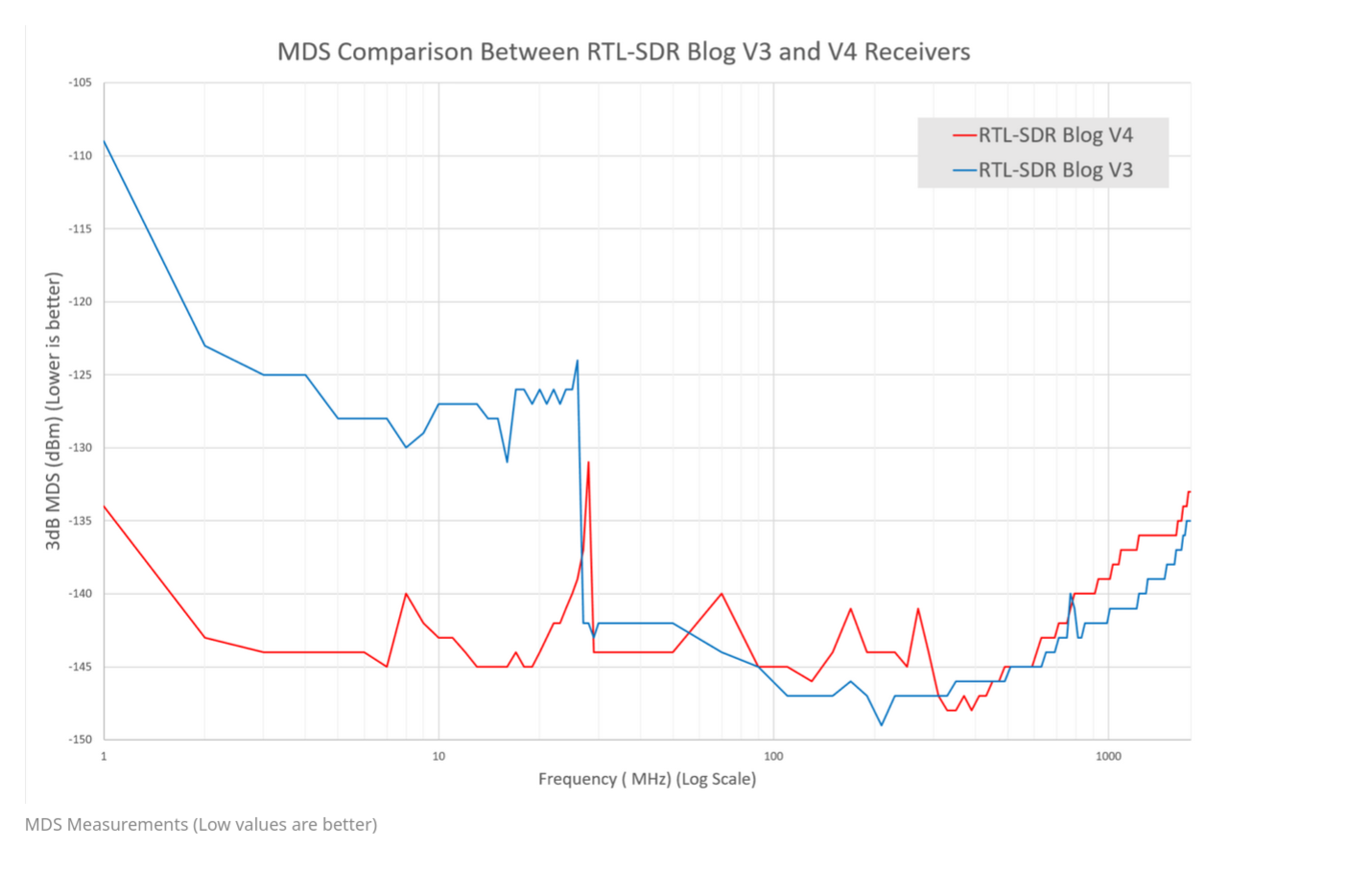
The bandwidth of the voyager signal is negligible, so we should get the best performance with an IF frequency around 400MHz. This means the RTL SDR needs to see an input power of around -140dBm, and the available power should be at least -134.5dBm. (or 282femtowatts, that’s 10e-17 watts)
Assuming low power mode of 12W on voyager 1, and that the voyager spaceprobe is pointed perfectly at earth for the ideal antenna gain characteristic of 48dBi, we need a minimum effective antenna area around…
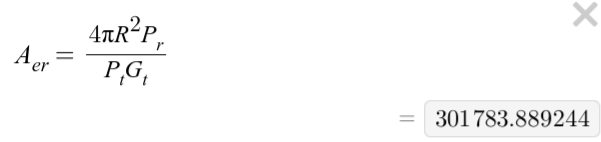
Or about 0.3 km²! A parabolic antenna 900m in diameter should be sufficient. I suggest we put it on top of the du bois library.
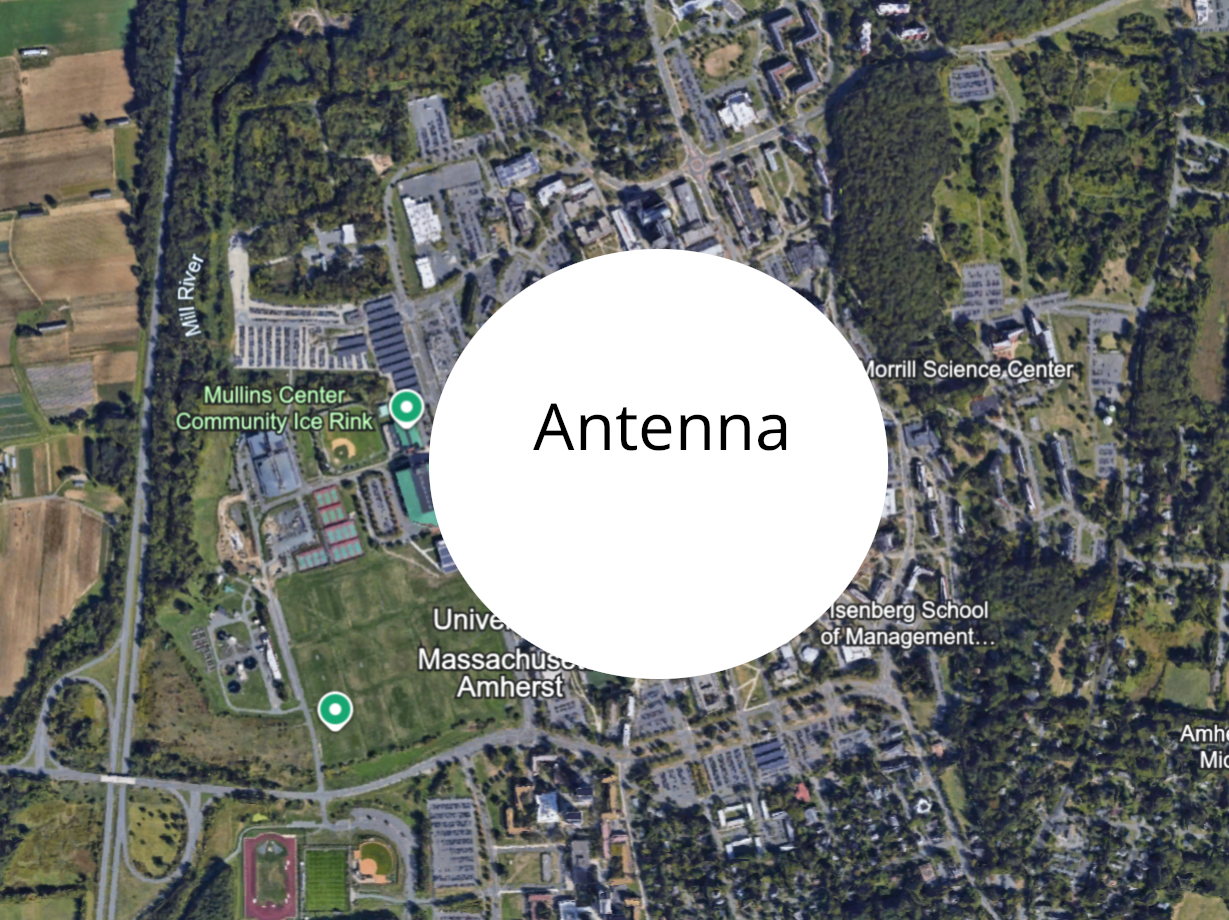
I see no problems with this.
NASA’s DSN uses parabolic antennas with 70m diameter, the main difference between the DSN and my calculations lie in the minimum required power. The DSN’s minimum receive power is around -180dBm!
(This all ignores the atmosphere, as I don’t have equations for it.)
