
Why do I need an O2 sensor?
Today’s post is inspired by some work I was doing on my senior project, and delves somewhat into the electrical control systems of most modern engines. The cornerstone of a modern fuel injection system is the fuel injectors, which send a very specific amount of fuel into an engine in order to maintain a constant air-fuel ratio. This AFR can vary wildly, but commonly ranges from 14.7 under most normal conditions (stoichiometric ratio for gasoline) to about 12 under high load. This richer (more fuel) mixture generally has many benefits such as less knock, cooling the engine, and of course making more power. However, simply knowing the ratio you want is completely useless if you have no way to calibrate it!
Enter the oxygen sensor, a part most people only know about when it breaks and causes their car to show the dreaded check-engine light. However, it’s far more important than you might think at first. If you, like me, are tuning your engine from scratch, you cannot simply say “I want this air-fuel ratio!” and magically receive it. You must first run the engine, with the fuel injectors running a certain amount, and then use a sensor to determine how close you are to the target ratio. This is a very iterative process, but some more modern engine control systems like the one I’m utilizing allow for closed-loop tuning. This magical system allows you to specify exactly the ratio you want at each position in a table (in which the axes are typically RPM and engine load), run the engine, and have a mostly perfectly calibrated system!
Street cars typically have all of this calibration done from the factory, so they can usually get away with running without an oxygen sensor. However, it is also used during the normal operation of the engine to ensure that there are no problems with running a dangerously lean (too little fuel) mixture among other things. This is why, if your oxygen sensor fails, you may be able to drive seemingly without issue.
Oxygen sensors themselves are very complex, but the simplest explanation is that they have small zirconium dioxide elements that, when heated to ~600 degrees C, produce a small voltage differential based on the oxygen concentration differential between free air and the exhaust gas stream. This voltage can then be read by an engine controller and used for calibrations in real time.
One of the disadvantages of this system is that the sensor must be mounted in the exhaust and managed by an external controller. The ECU I’m using takes care of this, but as I’m adapting a carbureted engine to use fuel injectors, the exhaust never came with provisions for a sensor like this. As such, I’ve had to weld a bung in myself.
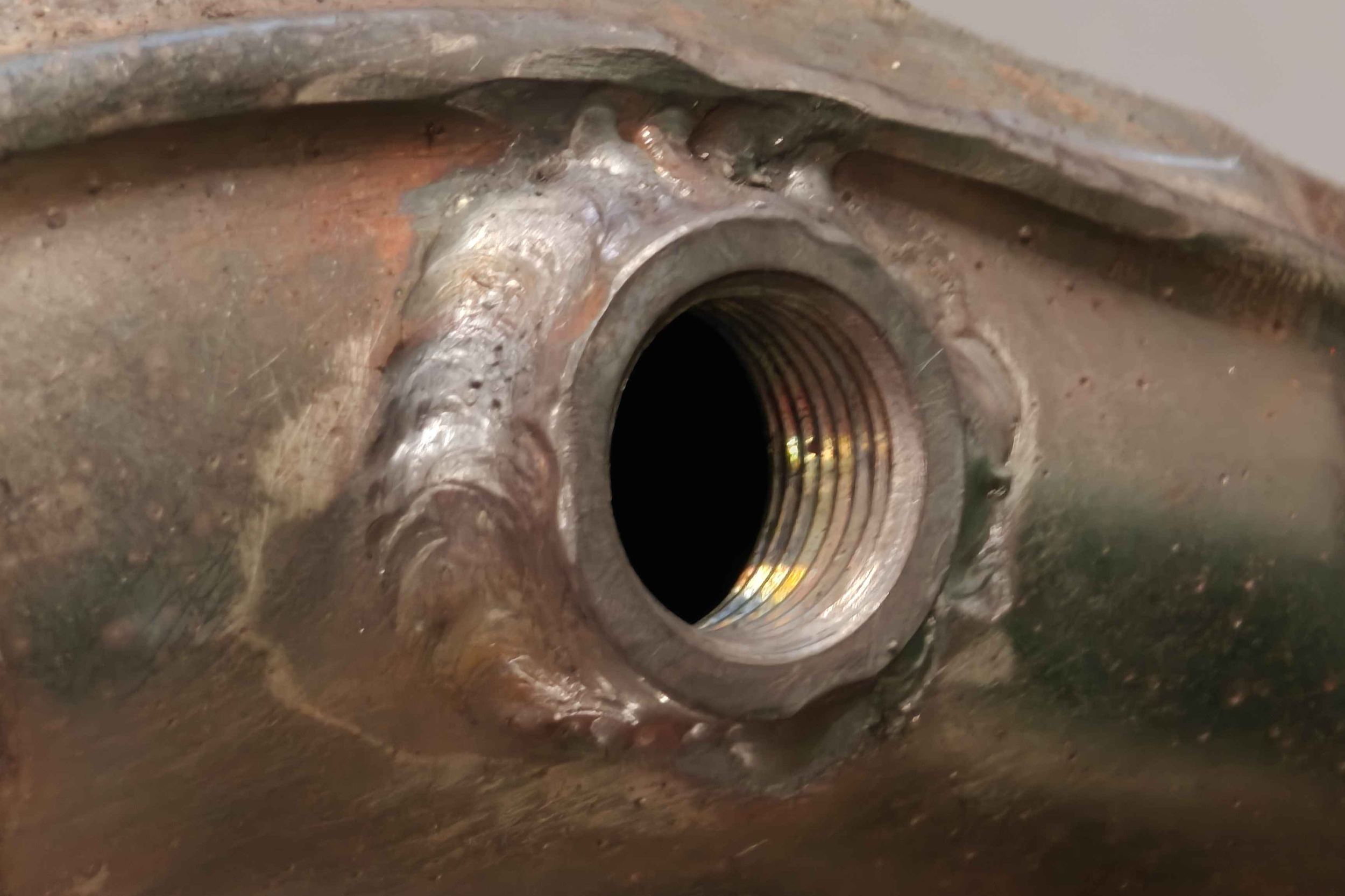
With this in place, I’ll be able to monitor the vitals of the engine, tune it properly, and hopefully optimize both the efficiency and power easily!
